Optional background music while you read
The day my mother broke the news to me that she had inherited HD, I felt the world shift beneath my feet. I knew life would never be the same for her, my dad, my two sisters, my brother and me. It was impossible for it to be, HD would be moving in on us. Uninvited and unwelcomed, but that didn’t matter to HD.
My exposure to HD began at a young age as I heard whispers about relatives being afflicted with the “Devil’s Dance”, which is what I sometimes heard HD being referred to as. I grew up in Newfoundland and Labrador, on Canada’s east coast, which is closer to the UK than it is to where I live now, in British Columbia, on the west coast of the country. The HD side of my family emigrated from Belfast, Ireland, but as we all know, HD knows no boundaries or borders. As HD families, we share in a horrific disease that is not confined to a specific geographical region.
I have lived most of my adult life coping with HD as the symptoms started to manifest in my mother and progressed over the years. For me, it meant every visit we had, I would quietly assess the changes in her, mentally keeping a tally on my severity checklist. I harboured feelings of deep resentment and rage at HD, trying to come to some sort of truce with something that had no intention of ever giving anything in return. HD was relentless in its pursuit of my mother, as it is with everyone who has it, and I was relentless in trying to change something that could never be changed. I put on my suit of armour, and I went to combat with an evil enemy who had waged a war against me, my mom and our family. It was a battle I knew I could never win, yet I persisted. Perhaps, that is what helped me cope through those 25 years. Perhaps, it allowed me to feel I was doing something. As I watched my mother gracefully move on with things, I felt anything but graceful as I remained mired in my own silent rage at the unfairness of it all. To lessen any guilt she was likely feeling, I felt obliged to roll out the welcome mat for my own anxiety and depression as I tried to reason with something that was completely unreasonable.
I didn’t focus much on my own at-risk status as my family lived the best lives we could under the circumstances. Although now that I reflect on it, my own gene status was always lurking in the dark crevices of my mind, and as I spent time with my mom and updated that mental tally of progression in her, I would wonder if that would be my own fate, too. My decision to not get tested is a choice to protect my own mental and emotional well-being. It’s not that I don’t think about it, for many of us who live at risk, we are often assessing our own cognitive, emotional and physical abilities. In my mind, every misstep I make, every uncontrolled jerk of limb, every moment of forgetfulness I have serves as a brazen taunt from the monster of HD.
I didn’t share much about HD with others and I kept much of my turmoil hidden over those decades. I felt I had to keep it all together for my mom, and for me too. My mom already felt guilty enough, I didn’t want her to know how the diagnosis made me feel, so I just kept quiet about it, taking the lead from her.
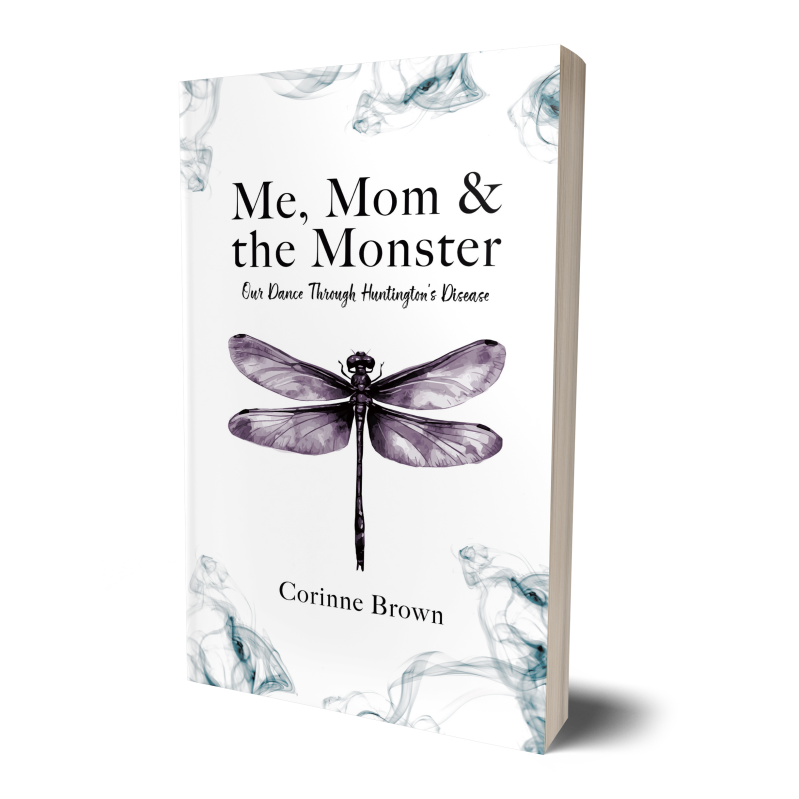
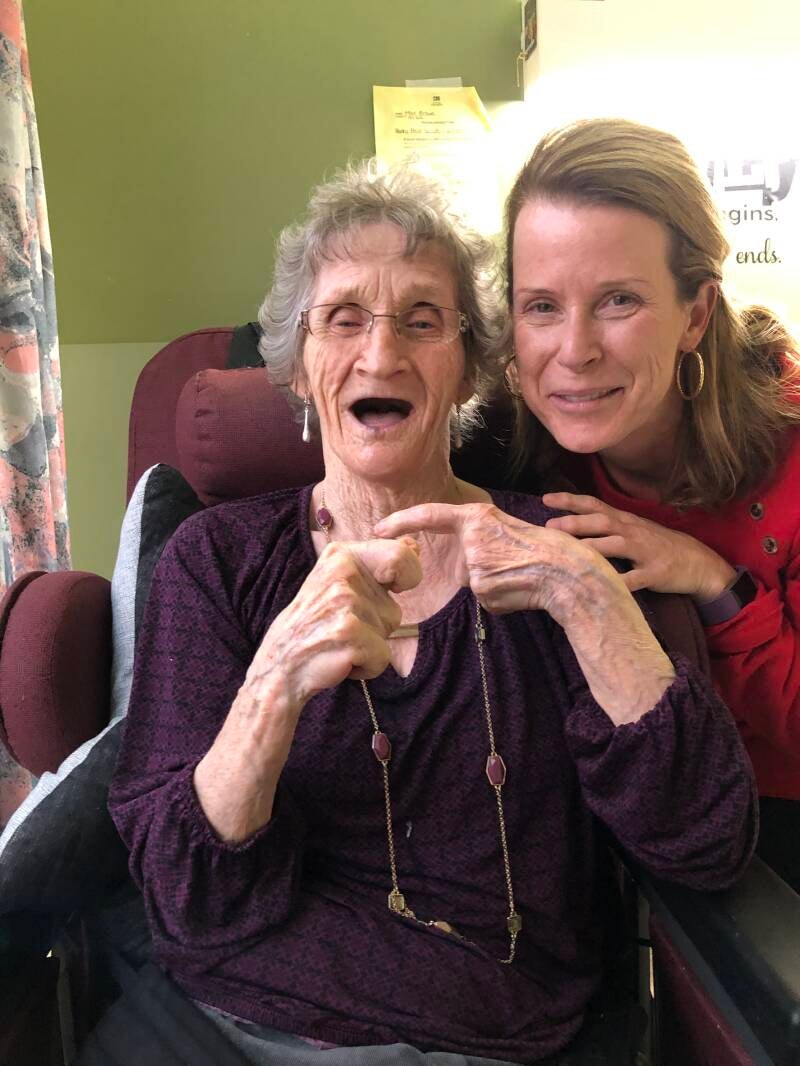
Struggling with the helplessness of HD over the years chipped away at me. I lost enjoyment in the things that previously soothed my soul, like writing. It was only after my mother died, 10 months after in fact, that I started to jot down a few sentences and phrases, a scattered word here and there until I eventually filled a notebook. I organized those scribbles, expanded on some thoughts, chapters started to take shape, and I eventually ended up writing a book about my mom and me and our experience with Huntington’s Disease. Living through the clinical manifestations of the disease was painful for me. There were specific things that happened as the disease progressed that will always stick out in my mind. My mother surrendering her driver’s license, giving up her lifelong knitting hobby, no longer able to work on the farm, her move into long-term care. Those were things that haunted me and as I would sit down to write about them, it caused me as much grief then as it did on those days when it happened. Somewhere along the way of putting my thoughts to paper, I began to understand and accept the anguish instead of fighting it. It was a peaceful surrender.
Writing it helped me understand and process exactly how I felt since I didn’t give myself that kind of space while my mom was still alive. It allowed me to fully realize just how difficult it was. I did the best that I could, like most everyone I know within the HD community. With the advances in communication over the years, it’s now simple to connect with other HD families globally and I’m so grateful and humbled to be part of a supportive, caring, empathetic community. I wanted to share the story of me and my mom in an effort to raise awareness of HD and to contribute to our HD community. Thirty years ago, when my mom was first diagnosed, I didn’t know another HD family, nor was I aware of any shared stories of HD experiences. I’m loving that we’re louder now, that we’re more open now, that we’re supporting one another by sharing our stories. There’s a sense of community in that for me, a sense of human connection, a sense of belonging and, probably most of all, a sense of respect, empathy and love.
Corinne is donating 100 per cent of all royalties from Me, Mom & the Monster to the Huntington’s Society of Canada for HD research. The book is most readily available on Amazon. Alternatively, click the button below to visit Corinne's website for more information.