

Help & Support
WHERE DO I START?
If Huntington’s has suddenly become part of your life, it can be hard to know what to do first. You don’t need to understand everything today. This is simply a place to start.
You may be worried about symptoms, your own genetic risk, someone you love, or what Huntington’s could mean for your family. Start with the part that feels most relevant to you.
1 Start with your GP
For most people in the UK, a GP is a good first place to start.
Tell them that Huntington’s disease is in your family, or explain the symptoms or worries that have brought you there.
Your GP does not need to have all the answers. Their job is often to help you take the next step and, where needed, put you in touch with someone who knows more about Huntington’s.
2 Getting to the right people
Your GP may put you in touch with people who have more experience of Huntington’s.
That could be a neurologist, a specialist Huntington’s team, a genetics service, or another healthcare professional depending on why you are asking for help.
Don’t worry if those titles mean very little to you at the moment. The important thing is getting to someone who understands HD and can guide you through what happens next.
3 Thinking about genetic testing
If Huntington’s runs in your family, you may eventually find yourself asking one of the biggest questions: Do I want to know?
Predictive genetic testing can tell an adult at risk whether they carry the altered Huntington’s gene, but it is not usually just a case of having a blood test and being handed a result.
You would normally talk things through with a specialist genetics team first. They can explain what the test can tell you, what the result might mean, and give you time to think about whether testing is right for you.
4 Finding the support you need
Huntington’s can affect many different parts of everyday life, so support may come from more than one person.
Depending on what is happening, that might include help with movement, speech, swallowing, eating, mood, daily living, equipment or care at home.
You may hear names such as physiotherapist, occupational therapist, speech and language therapist or dietitian. You do not need to know who you need before asking for help — that is what the professionals are there to work out with you.
5 Support for you and your family
Huntington’s rarely affects just one person.
Partners, children, parents, brothers, sisters, carers and friends can all be affected in different ways, and they may need information or support too.
There are organisations and support services that can help with everything from understanding HD to caring, family life, genetic questions and simply talking to someone who understands.
Finding the right person to talk to is enough for a first step.
A Doctor’s Perspective
Huntington’s disease affects far more than the person who receives the diagnosis.
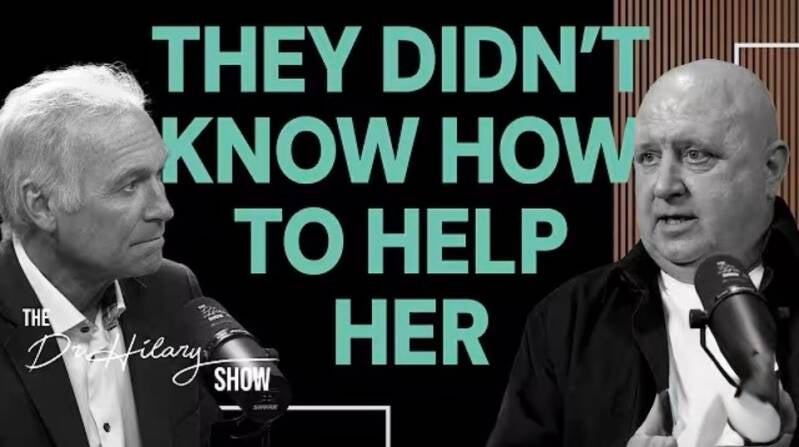
I spoke with Dr Hilary Jones about our family’s experience of Huntington’s disease, the impact it can have across generations, and some of the difficult realities families face when living with HD.
We also talked about awareness, genetic risk and why having the right information and support matters.
Finding Specialist Huntington's Support
Living with Huntington’s disease can involve many different challenges, and you shouldn’t have to navigate them without support.
Specialist Huntington’s disease services can provide advice and support for the person living with HD as well as partners, children, carers and other family members.
Depending on where you live, this may include specialist Huntington’s clinics, neurologists, genetic services, mental health professionals, physiotherapists, speech and language therapists, dietitians and other healthcare professionals.
Your GP can help refer you to the appropriate specialist services in your area.
There are also organisations dedicated to supporting families affected by Huntington’s disease, offering information, specialist advice and opportunities to connect with others who understand what living with HD can really mean.
Useful Support & Information
NHS

NHS – Huntington’s Disease
Reliable medical information about symptoms, diagnosis, treatment, genetic counselling and getting support.
HUNTINGTONS DISEASE ASSOCIATION

Huntington’s Disease Association
Specialist advice and support for people living with Huntington’s disease, people at risk, carers and their families across England and Wales. Their specialist advisers can also work alongside healthcare and social-care professionals.
HDYES
Huntington’s Disease Youth Engagement Service
Confidential support from the Huntington’s Disease Association for young people aged 8–25 affected by Huntington’s disease in their family.
Need urgent help?
What Is HD? cannot provide emergency or individual medical support. If you or someone you care for needs urgent help, please contact one of the services below.
Immediate danger or risk to life
Call 999 or go to your nearest A&E.
Urgent mental-health support
Call NHS 111 and select
mental health option 2.
Need someone to talk to?
Call Samaritans free, day or night, on
116 123.
These services are for people in the UK. If you are outside the UK, please contact your local emergency or crisis-support service.