

Explaining Huntington's To Children
How do you explain Huntington's disease to a child without frightening them?
Children often notice that something is different long before we realise how much they’ve noticed. Someone may move differently, speak differently, behave unexpectedly or need more help than they used to.
The aim isn’t to tell children everything at once. It’s to help them understand, in words that are right for their age, that HD is an illness, they haven’t caused it, and it’s okay to ask questions.
Why this page matters to me
This page was inspired by my own grandchildren.
I watch them with their nan and see the love they have for her. Right now they’re too young to understand Huntington’s disease, but I know there will come a day when they start to notice things and ask questions.
And, if I’m truthful, I don’t have all the answers. I’m not an expert in explaining Huntington’s to children. I’m a granddad who knows that one day I’ll need to find the right words.
That’s why I’d like this page to grow through the experiences of other families too.
How did you explain HD to your children or grandchildren? What helped? What do you wish you’d known?
If you’re comfortable sharing your experience, we’d love to hear it. Your story might help another family find the words they’ve been struggling to find.
FINDING THE WORDS
Sometimes knowing that you should talk to a child is easier than knowing what to actually say. You don’t need a medical explanation. Often a few simple, honest words are enough to begin.
Tap a question below for a simple way of explaining it. You can change the wording to suit your child, their age and your own family situation.
“Why does Nan keep moving?”
Children often notice movement before they understand anything about Huntington’s. A simple explanation is usually enough.
Keep it short, and let their next question guide how much more you explain.
“Can I catch Huntington’s?”
This can be especially important if a child has noticed coughing, unusual movements or changes in behaviour and thinks HD might be contagious.
“Why is Mum or Dad acting differently?”
Huntington’s can sometimes change how somebody thinks, feels or behaves. Children may notice this before adults realise how much they have seen.
“Will Mum or Dad get better?”
This can be one of the hardest questions. You can be honest without giving a child more information than they need.
You do not have to explain the whole future in one conversation.
“Is it my fault?”
Children can sometimes connect illness with arguments, behaviour or things that happened around the same time. Clear reassurance can matter enormously.
“Will I get Huntington’s too?”
How you answer this will depend on the child’s age and your family situation. You don’t have to explain genetics in detail unless the child is ready for it.
Older children and teenagers may need a fuller conversation about inheritance and genetic risk, ideally with support if needed.
“Why can’t Nan talk like she used to?”
This can help children understand that difficulty speaking does not mean somebody has stopped caring or stopped being themselves.
“Why does Nan need so much help now?”
You don’t have to have every answer
It is okay to say: “I don’t know, but I’ll try to find out.”
As children grow, the conversation can grow with them. What matters most is that they know they are allowed to ask, and that the adults around them will answer as honestly and gently as they can.

Looking for professional advice?
For specialist support and guidance on talking to children about Huntington’s disease, click the Huntington’s Disease Association Youth Engagement Service logo below.
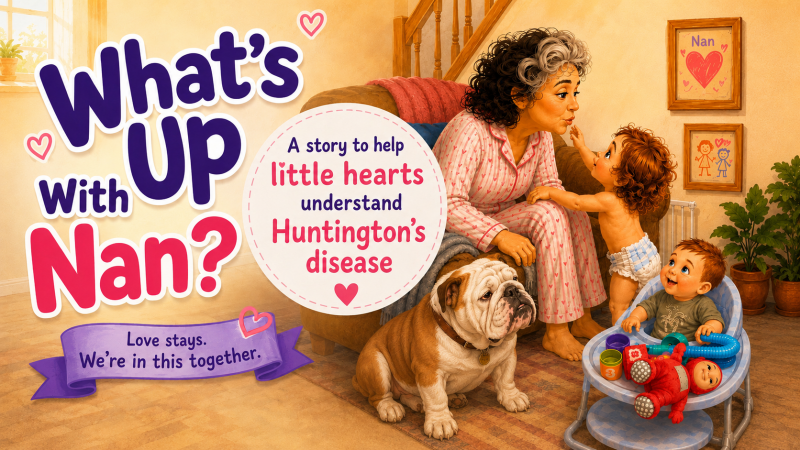
What's Up With Nan?
A little story to help start a bigger conversation.
What’s Up With Nan? follows Ruby and Beau (my grandchildren) as they begin to notice that their Nan does some things differently. With a little help from Granddad, they discover why and learn that although Huntington’s disease can mix up the messages in Nan’s brain, it can never mix up the love she has for them.
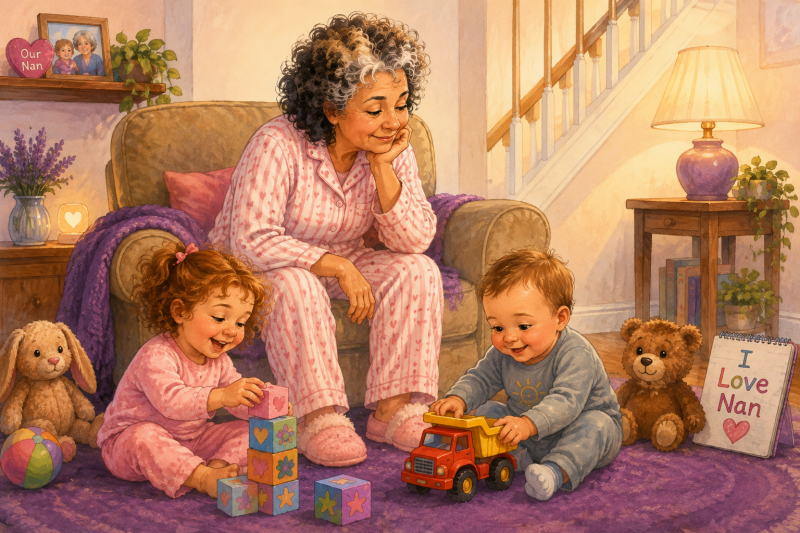
Ruby and Beau loved visiting their Nan.
They loved playing with their toys.
They loved making her laugh.
And Nan loved every moment they spent together.
Whenever she saw them…
she smiled. ❤️
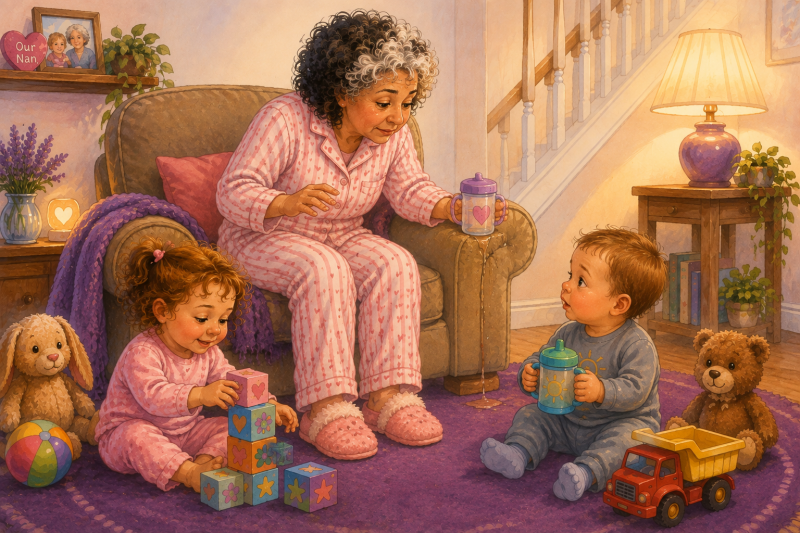
One sunny afternoon, Ruby and Beau were playing with their toys while Nan watched from her favourite chair.
She smiled as they laughed together.
Then…
Nan accidentally spilled her drink.
Beau looked at the cup in his own hands.
Then he looked back at Nan.
He frowned.
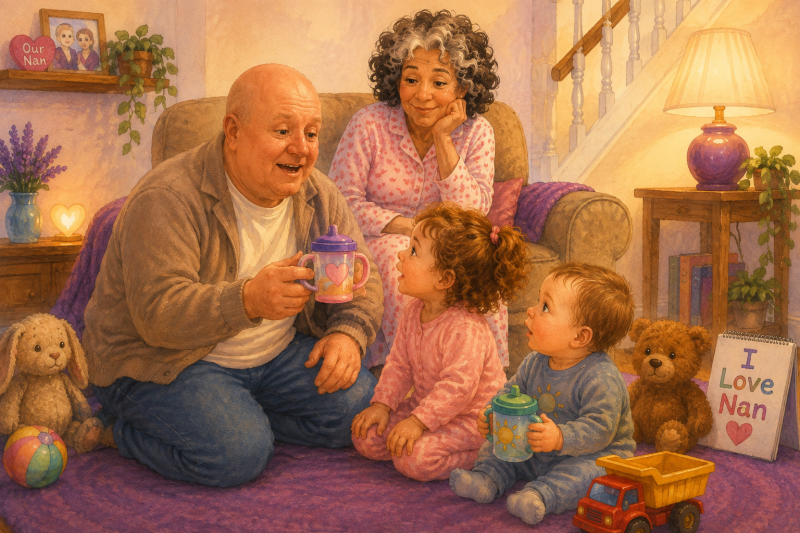
“Ruby… why has Nan got the same cup as me?”
Ruby looked carefully.
She hadn’t noticed before.
“I don’t know.”
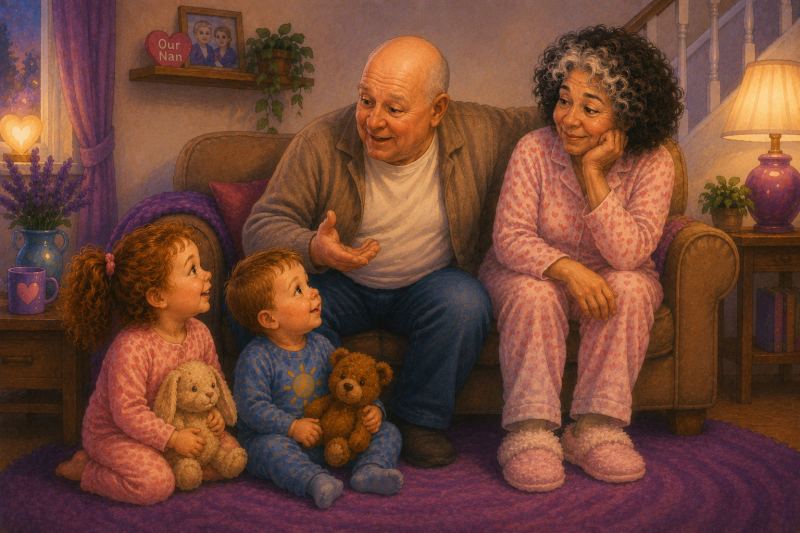
Grandad came and sat beside them.
“You two look like you’ve got some questions,” he said with a smile.
Ruby pointed towards Nan’s cup.
“Why does Nan have a cup like Beau’s?”
Grandad picked it up.
“This special cup helps stop drinks from spilling.
Sometimes Nan’s hands don’t always do exactly what she wants them to.”
Beau smiled.
“So… it’s helping Nan?”
“It is,” Grandad replied.
“And that’s a good thing.”
A little while later…
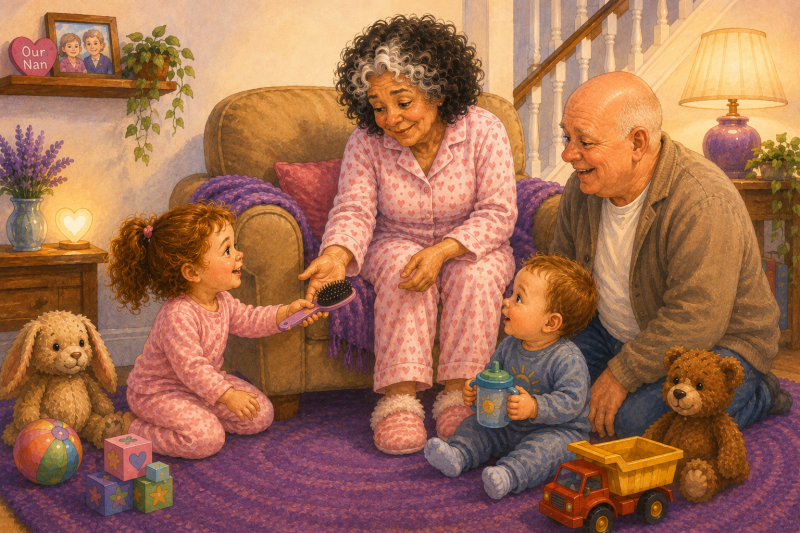
Nan reached for her hairbrush.
It slipped onto the floor.
Ruby picked it up and placed it back beside Nan.
Then she looked at Grandad.
“Did Nan forget how to hold it?”
Grandad gently shook his head.
“No, sweetheart.
Nan hasn’t forgotten.
Some things are just much harder now.”
Later that afternoon…
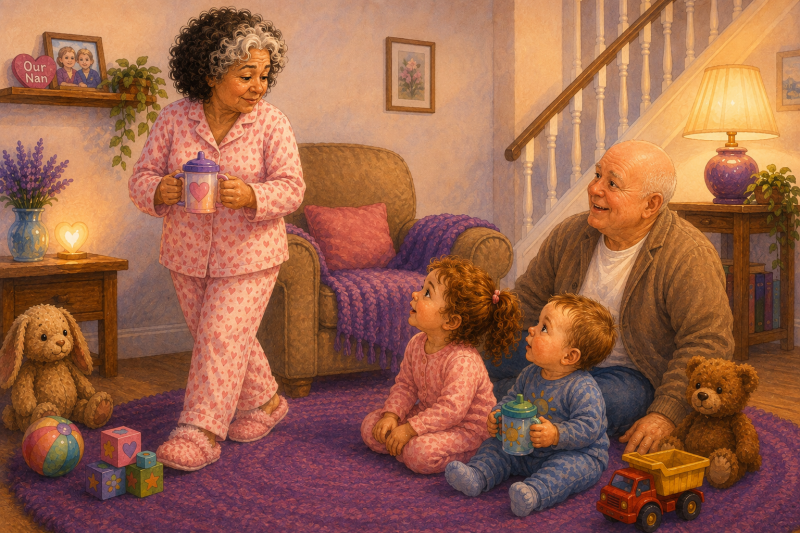
Nan stood up to walk across the room.
Her feet wobbled a little.
She took her time.
Beau watched carefully.
Then he quietly asked,
“Why does Nan walk differently?”
Grandad sat Ruby and Beau on his lap.
“You know something?
Inside everyone’s brain…
there are millions and millions of tiny messages.”
“One message helps your hands hold your teddy.
One helps your feet know where to walk.
One helps you swallow your dinner.
One helps you smile.
And another helps you find the words you want to say.”

“Most of the time, every message arrives exactly where it should.” But sometimes an illness makes some of Nan’s messages get mixed up.
Sometimes they arrive a little late. Sometimes they lose their way. Then Ruby began to put everything together.
“That’s why Nan spilled her drink?” “Yes.” “And why she dropped her brush?” “Yes.” “And why she walks differently?” “Yes.”
Beau thought for a moment. “Does the illness have a name?” Grandad smiled gently. “It does. It’s called… Huntington’s disease.”

Nan looked across at Ruby and Beau.
She wished she could explain everything herself.
She wished they knew how hard she was trying.
But the words stayed quietly inside.
Inside her heart, Nan whispered…
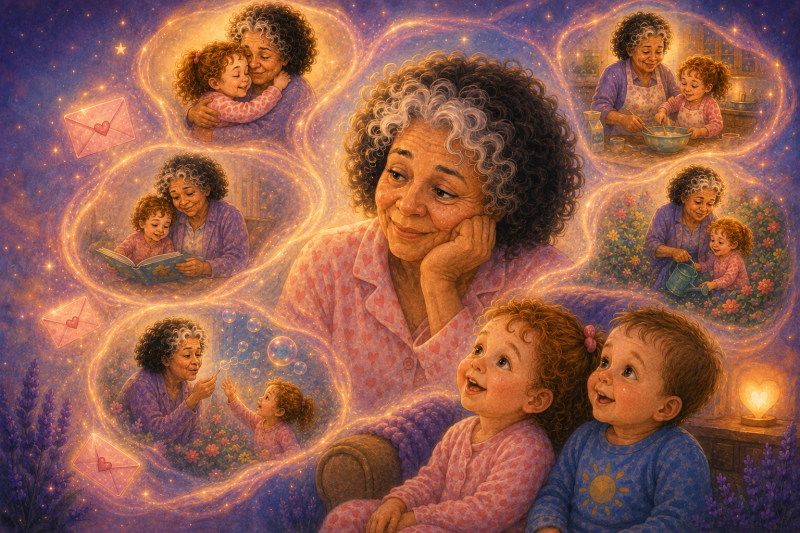
I wish I could tell you I’m trying.
I wish you knew I’m still me.
I still hear every giggle.
I still feel every cuddle.
I still know every smile.
Ruby looked at Grandad.
“Does Nan still know who we are?”
Grandad smiled. “Oh yes. She knows exactly who you are.”
Beau asked quietly,
“Can she still hear us?”
Grandad nodded.
"Every single word.”
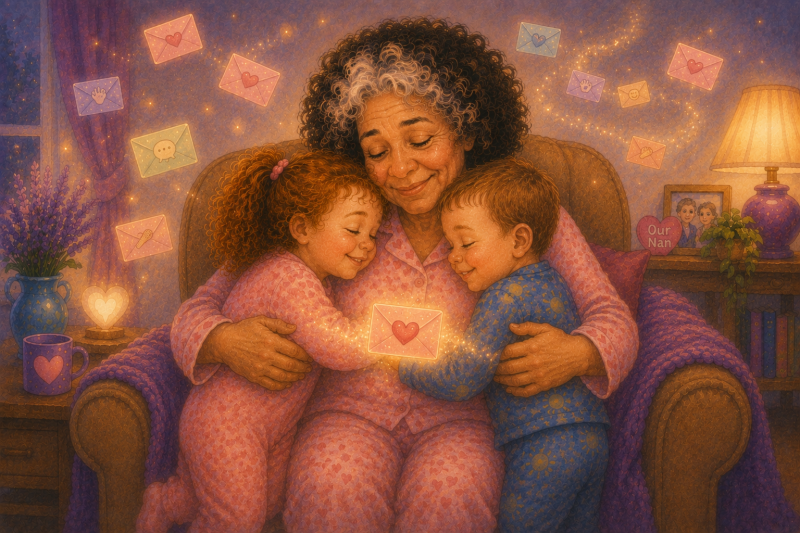
Ruby walked over to Nan. Beau followed.
Both children wrap their arms around her.
Nan holds them as tightly as she can.
She didn’t need lots of words. Her cuddle said everything.
❤️ Inside her heart, Nan whispered…
The messages in my brain might get mixed up…
…but the love in my heart never will. ❤️
A gentle place to begin
Sometimes the people we love need a little extra help.
Sometimes they need a little extra patience.
And sometimes they need an extra cuddle.
If someone you love has Huntington’s disease, remember something very important:
The messages might get mixed up…
but love never does. ❤️
What’s Up With Nan? isn’t intended to explain everything about Huntington’s disease. It’s simply a gentle way of beginning a conversation.
Every child is different. Some will ask lots of questions straight away. Others may simply accept what they’ve heard and come back with questions later.
You don’t need to have all the answers. Sometimes the most important thing is simply helping a child understand that it’s okay to ask questions, it’s okay to feel confused, and the person they love is still the person they love.